Innovation ecosystems as enabling conditions for smart rural futures: RURACTIVE at the European Week of Regions and Cities
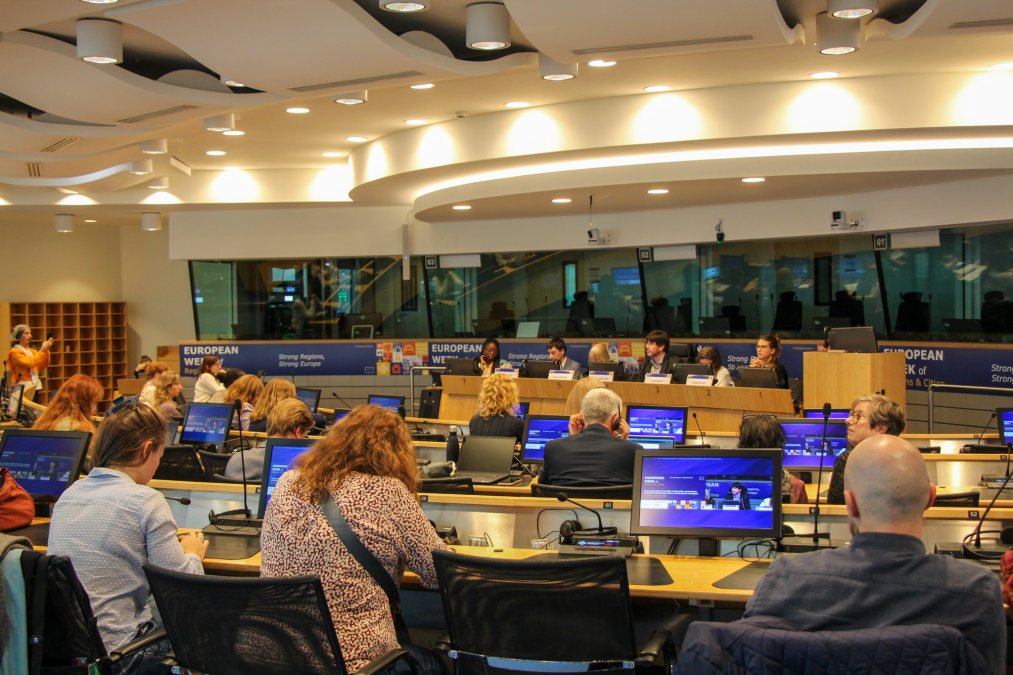
RURACTIVE joined its sister projects SMART ERA and FUTURAL on 13 October at the EURegionsWeek in Brussels, in the session “From Grassroots Innovation to EU Policy: Governance Pathways Linking Local Action and European Strategies”, moderated by Serafín Pazos-Vidal, senior policy expert at AEIDL. The session asked how grassroots innovation can influence regional, national and European policymaking, and how local experimentation can lead to structural policy change.
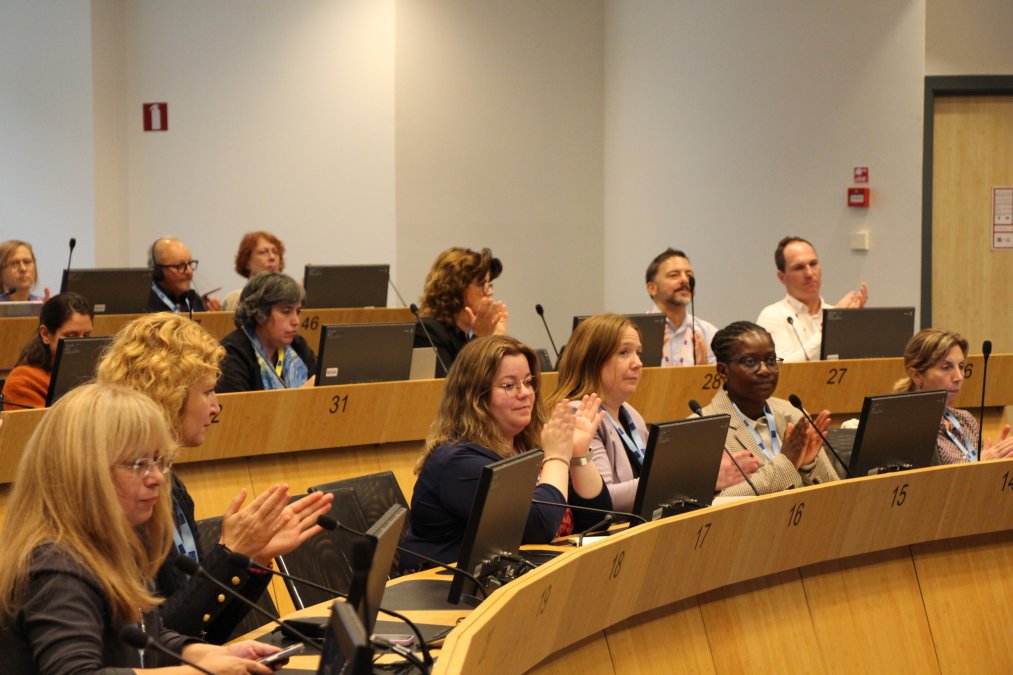
Over 60 participants from a broad range of actors took part. Local and regional authorities were the largest group (30% of participants), followed by NGOs and private sector representatives, academics and EU officials.
RURACTIVE coordinator Prof. Claudia De Luca presented the project’s approach and preliminary results. Its multi-actor Rural Innovation Ecosystems bring together people (stakeholders), places (territories and physical assets) and practices (current or planned solutions) to identify local challenges and co-create place-based solutions.
Two Dynamos (pilots) illustrated how this works. In the Province of Zamora (Spain), anchored by the Diputación de Zamora, stakeholders from health services, pharmacies, elderly associations, tourism, local media and farming are responding to climate pressure, social isolation and limited access to basic healthcare. Solutions include the Silver Smart Corner, with public climate shelters for the most fragile groups, distributed health services and place-based caregiver services. In Val di Fiastra, Marche (Italy), anchored by Borgofuturo APS, local actors are tackling depopulation, the lack of affordable housing and the fragility of socio-cultural organisations. “Housing as a common good” explores solidarity-based public-private and cooperative models and a better link between cohesion policy and the CAP, to support the right to stay.
From these experiences, Prof. de Luca shared the following conclusions:
- Strengthen place-based governance and community participation in service planning.
- Integrate climate adaptation and mititgation, biodiversity and social justice in the rural transition.
- Recognise culture as a pillar of the rural transition and of the Right to Stay.
- Recommendations come from people, places and practices, so structured listening approaches are needed.
Sister projects, shared conclusions
The two sister projects approached the same question from their own angle. Vanessa Halhead of the European Rural Community Alliance (ERCA) presented FUTURAL findings which suggest that community-led solutions work because they respond to community needs and rely on community adoption, and that the right policy and governance mix can help them reach vulnerable communities. One of the five governance frameworks emerging from the project calls for strong rural innovation ecosystems and networks anchored in organised civil society, and she stressed the role of intermediary organisations, rural movements and rural parliaments in connecting local communities with national and EU levels.
Matteo Gerosa of Fondazione Bruno Kessler showed how SMART ERA builds “Smart Innovation Packages” around a technological solution, adding incentive models, governance arrangements and community engagement. Among the project’s emerging recommendations: digital transformation works when embedded in local ecosystems, capacity-building and governance matter as much as infrastructure, and replication requires packaging solutions rather than individual pilots.
These conclusions were echoed in the discussion. Vania Freitas of the Assembly of European Regions (AER) stressed that a good idea is not enough without an enabling ecosystem, and called for a shift from funding innovation to funding ecosystems: local capacity, coordination between stakeholders and long-term financial and political support. The discussion also showed the range of solutions across the three projects, from less technological, place-based responses to more technology-driven ones. What matters is what the community needs.
 The speakers of the joint session at the European Week for Regions and Cities
 Prof. Claudia de Luca
 Vanessa Halhead
 Dr Matteo Gerosa
 Vania Freitas